

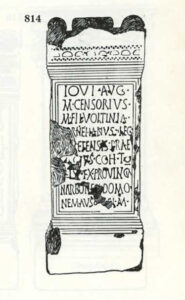
Illustration of the altar from Tullie records.
As part of a review of historic loans, and in conjunction with our John Ellerman Foundation-funded project on De-Tabooing Disposals, Tullie is transferring a Roman altar dedicated to the god Jupiter to the Senhouse Roman Museum in Maryport.
The altar was discovered on the site of the Roman fort at Maryport in the 17th century by the Senhouse family, becoming part of their collection of Roman stonework before being gifted out of the area in the 18th century. A later owner then donated it to what was then known as the Carlisle Museum in 1907.
The rest of the family’s collection was put on display in the new Senhouse Roman Museum in 1990, where the Tullie altar soon joined it on a long-term loan agreement, which expires this year. Long-term loans like this aren’t usually made today, with museums instead preferring a shorter loan period, generally between 1-5 years. This allows both museums to more regularly review whether the initial reasons for the loan are still relevant, and to decide whether to renew the agreement or return the objects.
In this case, because the altar has been on display for over 30 years and has closer links to both Maryport and the rest of the Senhouse collection, the decision has been taken to formally transfer it to the Senhouse Museum, where it can continue to be seen by visitors.
Dr Pete Wilson, Chair of Trustees, Senhouse Roman Museum said:
“The Senhouse Roman Museum has been grateful to Tullie House Museum and Art Gallery Trust for its generosity in providing altar RIB 814 on loan since 1990. The altars and other Roman-period stonework collected by the Senhouse family form the core of the internationally important Netherhall Collection that our Museum is privileged to display. We are delighted that Tullie have decided to formally transfer an important element of Maryport’s Roman history to our care.”

